
Summary
Tattoo-associated uveitis (TAU) is a rare inflammatory condition characterized by the simultaneous onset of uveitis and induration (hardening/swelling) of tattooed skin. It typically presents as a delayed hypersensitivity reaction, often occurring months or even decades after the tattoo was placed. The condition shares significant histopathological overlap with sarcoidosis, making differential diagnosis critical for appropriate management.
The disease in literature
Tattoo-associated uveitis (TAU) has been mentioned in scientific literature since 1995, however an increasing volume of publications can be found starting 1994 with a peak in 2015. Broader literature can be found here: Pubmed review
Pathophysiology & Tattoo Ink
The exact mechanism of TAU involves a granulomatous inflammatory response to tattoo pigment. The ink particles, particularly darker pigments, are digested by macrophages but cannot be fully degraded. In susceptible individuals, this chronic antigenic stimulation leads to the formation of non-caseating granulomas.
It is hypothesized that a systemic trigger—possibly an infection or immune dysregulation—activates these dormant granulomas in the skin and simultaneously triggers inflammation in the uveal tract of the eye due to molecular mimicry or a shared hypersensitivity pathway.
Clinical Presentation
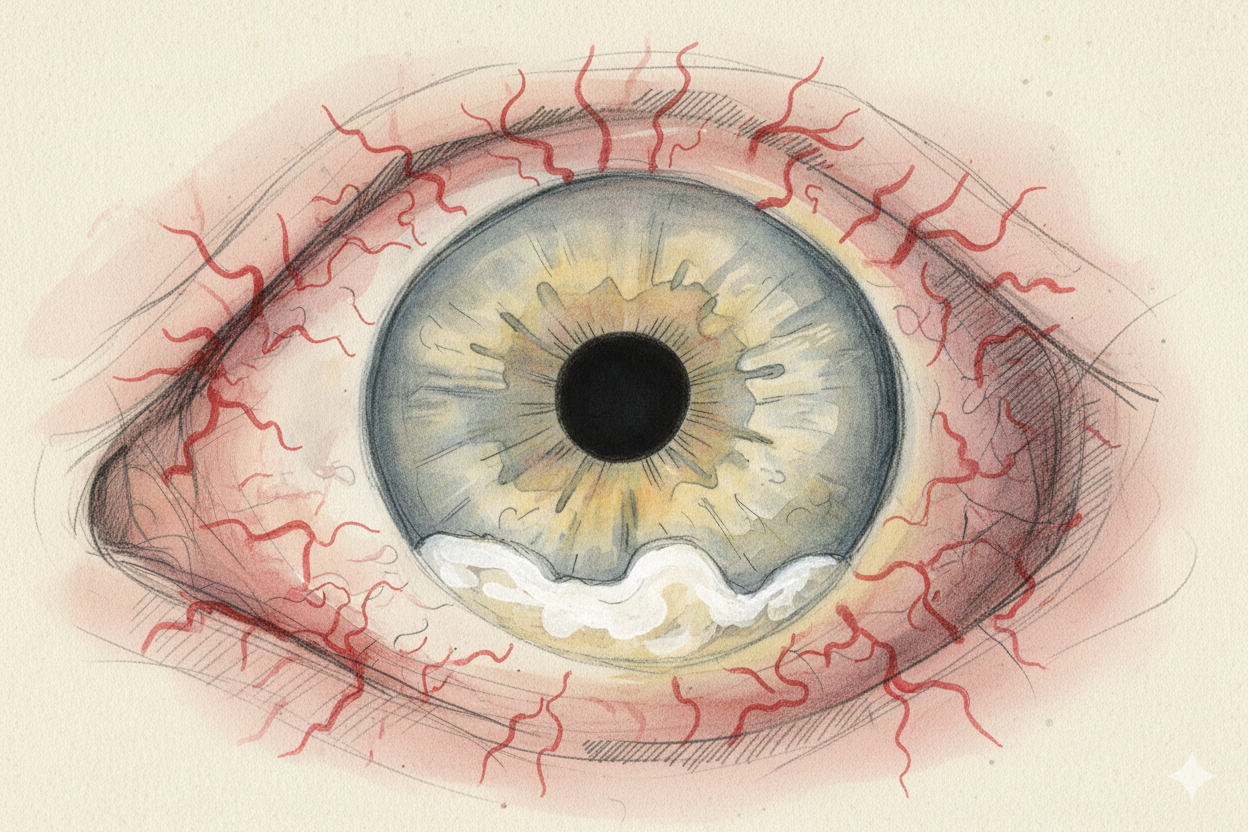
Patients typically present to ophthalmology clinics with symptoms of uveitis, which may include:
- Bilateral non-granulomatous or granulomatous uveitis (most common).
- Blurred vision and floaters.
- Photophobia (light sensitivity) and ocular pain.
Concurrently, patients report changes in their tattoos. These dermatological findings are pathognomonic when paired with uveitis:
- Induration, elevation, and erythema of tattooed skin (specifically in inked areas).
- Scaliness or nodules within the tattoo pigment.
- Absence of skin lesions in non-tattooed areas.
Differential Diagnosis
The primary differential challenge is distinguishing TAU from systemic Sarcoidosis. Both conditions present with non-caseating granulomas. However, TAU is strictly confined to tattoo ink in the skin and the eyes, whereas Sarcoidosis may affect the lungs (hilar lymphadenopathy), liver, or other skin areas.
Diagnostic workup usually includes chest imaging (X-ray or CT) and serum ACE levels to rule out systemic sarcoidosis. In pure TAU, chest imaging is typically normal.
Management & Prognosis
Management focuses on suppressing the inflammatory response. The prognosis is generally favorable with appropriate treatment.
First-Line Therapy
Topical corticosteroids (e.g., prednisolone acetate) for anterior uveitis and high-potency topical steroids for skin induration.
Systemic Therapy
Oral corticosteroids may be required for posterior segment involvement or severe skin reactions. In recalcitrant cases, steroid-sparing immunosuppressive agents (e.g., methotrexate) may be considered.
Tattoo Removal
Laser removal is generally contraindicated during active inflammation as it may liberate more pigment antigen and exacerbate the systemic immune response. Excision is rarely necessary.
Conclusion
Tattoo-associated uveitis is an important clinical entity that requires a high index of suspicion. A simple physical examination of a patient's tattoos during an ophthalmologic workup can prevent unnecessary invasive testing.